Watershed Reports
The Watershed Reports, a national assessment of freshwater, is now based at Water Rangers, powered by AquaAction
The Watershed Reports, first created in 2017 by WWF-Canada, are the first national-scale assessment of the state of freshwater in Canada. As of August 2023, Water Rangers is the Watershed Reports’ new steward!
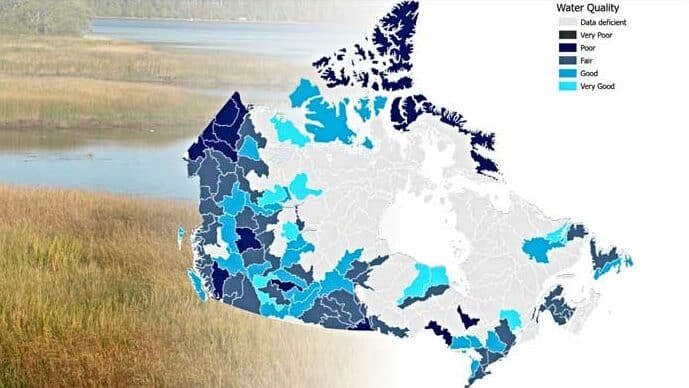
The Watershed Reports were created to identify and address critical knowledge gaps about freshwater health in Canada and to help guide efforts to improve. Prior to the creation of the reports, there was no nationally standardized assessment of Canada’s watersheds – a concerning situation given the vital importance of watersheds to our ecology, economy, culture and history! The Watershed Reports contribute to understanding the challenges of collecting data across such a vast area and making data on freshwater health available to the public.
What are the Watershed Reports?
Who
The Watershed Reports includes data from governments, researchers, and community groups. They were originally created by WWF-Canada. Starting in 2024, will be stewarded by Water Rangers, powered by AquaAction.
What
The Watershed Reports are an interactive tool that shows scores for 4 aspects of river health and 7 key threats at a watershed and subwatershed scale.
When
The Watershed Reports are updated every 3-5 years. The last assessment was made in 2020 and the next one will be released in Fall 2024.
Where
The Watershed Reports assess watersheds across the country, at a high-level. While it can't provide nuanced answers to local concerns, it shows where to start searching for answers or investing in sharing data.
Why
The Watershed Reports are the only national assessment of water health and have been a driving force investment in open data sharing in Canada! Importantly, the Reports are created independently of government, with an expert review board.
Looking forward
The Watershed Reports contain recommendations on moving from data to action.
The history of the Watershed Reports
-
2017
First Watershed Reports was published
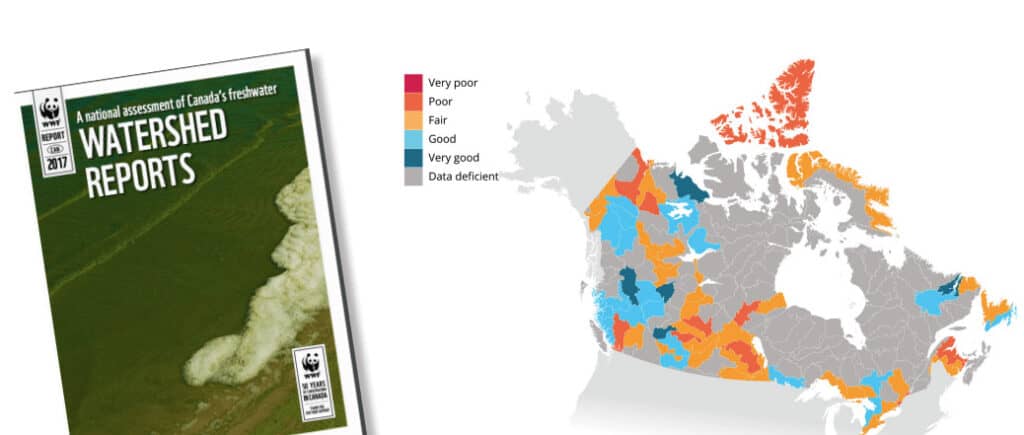
WWF-Canada published the first edition of the reports in 2017, with assessments completed for each of Canada’s 25 major watersheds and their 167 sub-watersheds. At the time, 110 out of 167 sub-watersheds lacked enough data to paint a baseline picture of their overall health. That’s right- we didn’t even have enough data to determine how healthy most of our sub-watersheds were!
The launch, as part of the Healthy Waters Summit, featured groups from across the country, including decision-makers, academics, and environmental non-profits.
CTV News article about the launch, featuring Prime Minister Justin Trudeau's comments
-
2019
Projects across Canada funded to address data gaps and improve watershed health
After the publication of the first report in 2017, funders and organizations had a common language to determine how they could make progress on filling data gaps and improve water quality. Water Rangers was one of the successful projects, which included equipping communities in data deficient sub-watersheds with water testing tools. This project showed the value of building local capacity for water monitoring. Not only that, but Masters students at McGill used this project as part of their research on behaviour change in relation to water testing, too! By and large, the results show that people want to help. Our project was just one of many that informed the publication of the next Watershed Reports.
-
2020
Second Watershed Reports was published
In 2020, WWF-Canada released an updated assessment showing that data deficiency was still a major concern, with nearly 60% of sub-watersheds not being attributed a score.
However, that means that 5% more subwatersheds had enough data: some progress was being made! Much of this progress, in fact, came from organizations actively promoting data sharing and capacity-building in communities. For example, leadership from organizations like DataStream in providing standardized and open datasets has been integral. Their work with regional and national collaborators like Water Rangers, Atlantic Water Network, Lake Winnipeg Foundation, and so many more, are leading this progress.
Of the watersheds with sufficient data to be assessed, 64% received a score of Good or Very Good. To this day, Watershed Reports are still the only national-scale assessments of watershed health and threats of their kind in Canada.
Water Rangers feature: Good news brought to you by WWF-Canada’s Watershed Reports!
Article: DataStream Data Informs Assessment of Freshwater Health
Article: 5 future fixes from WWF Canada’s 2020 Watershed Reports
-
2024
Transition to Water Rangers
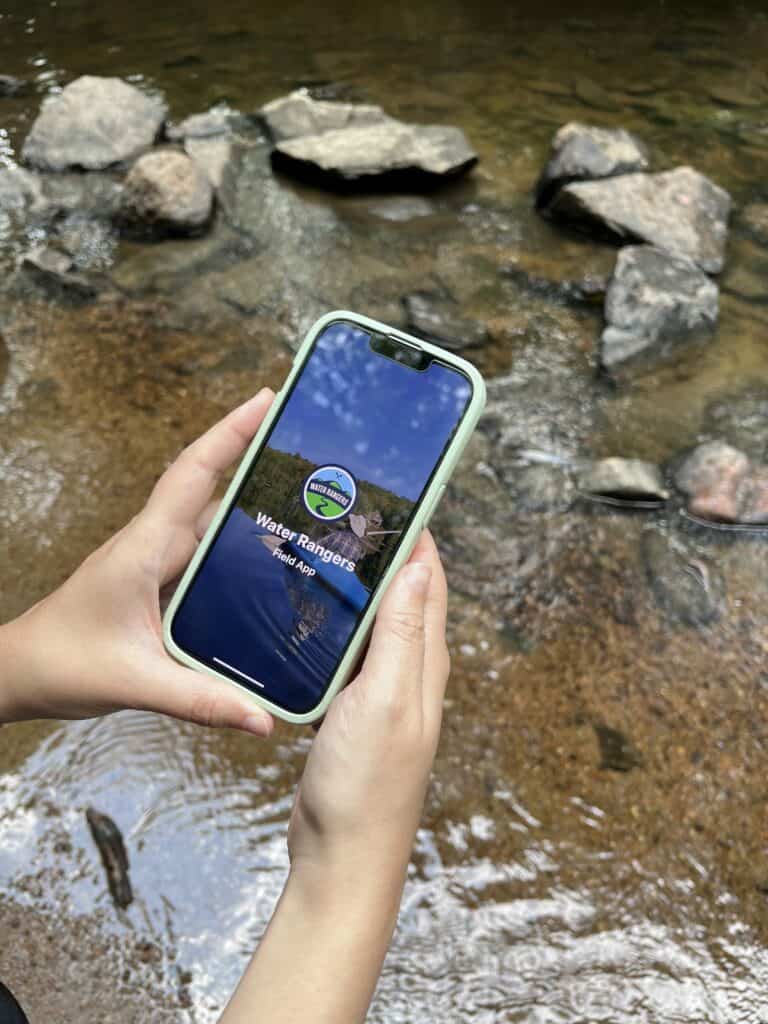
Water Rangers became the stewards of the Watershed Reports in 2023. Our team has begun work on the third edition of the reports, set to be published in the fall of 2024. This work includes the formation of an expert advisory committee and review committee to inform the reports and review the data assessment prior to public release. Following the recommendations, Water Rangers has committed to regularly updating the assessment.
If you have any questions about this process, please get in touch!
About the transition (blog post)
The new Watershed Reports will be powered by AquaAction
AquaAction has joined Water Rangers as the exclusive sponsor of the Watershed Reports, and is supporting the transition to the new home, as well as the creation of the 2024 report. Water Rangers is the first winner of the AquaHacking Challenge, the flagship program of AquaAction.