Keep it Fresh: Protecting our freshwater from winter salt use
Learn how salts used to de-ice our roads, sidewalks, and parking lots impact our freshwater, and how to take action.
We have a salt problem
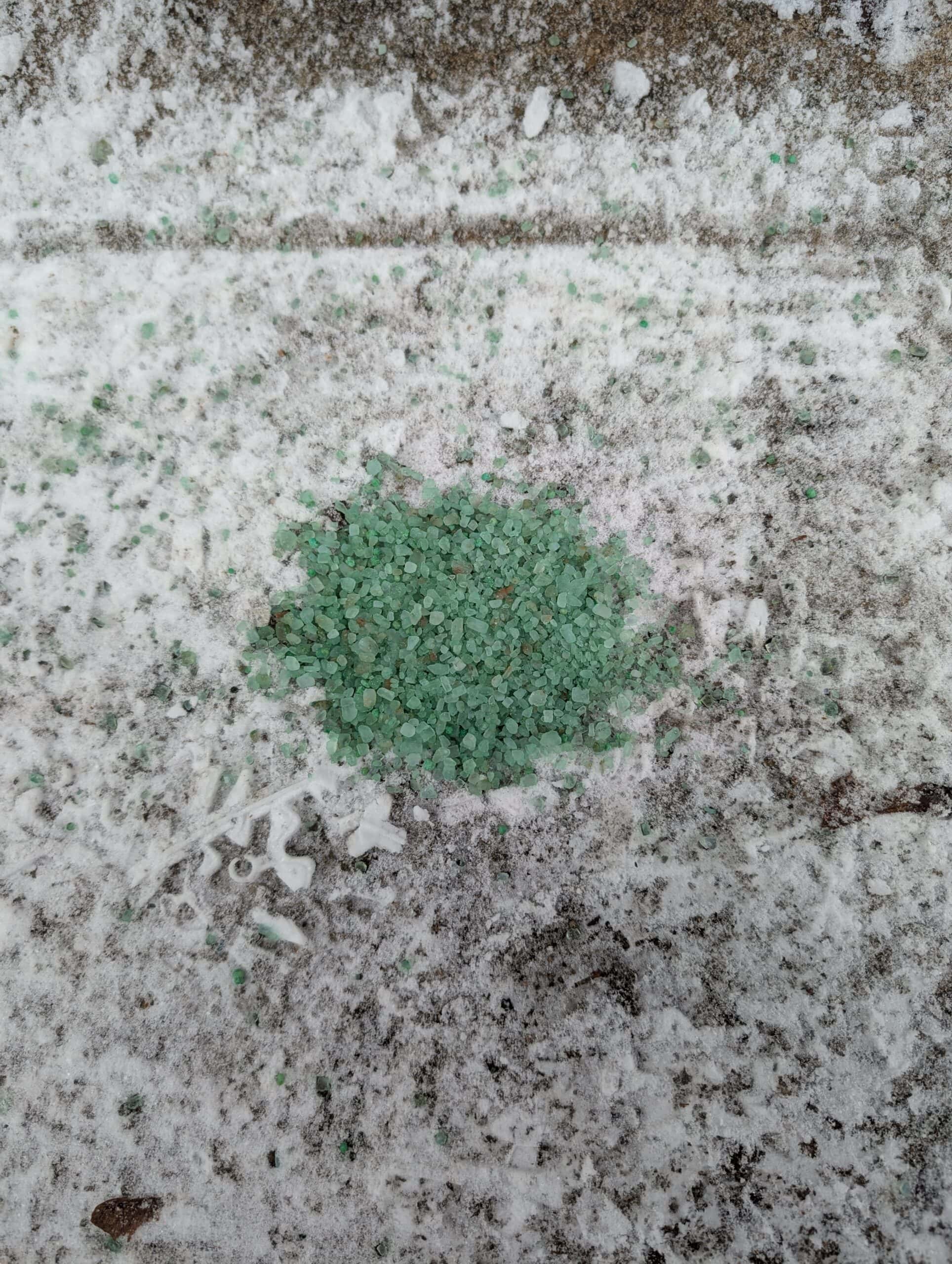
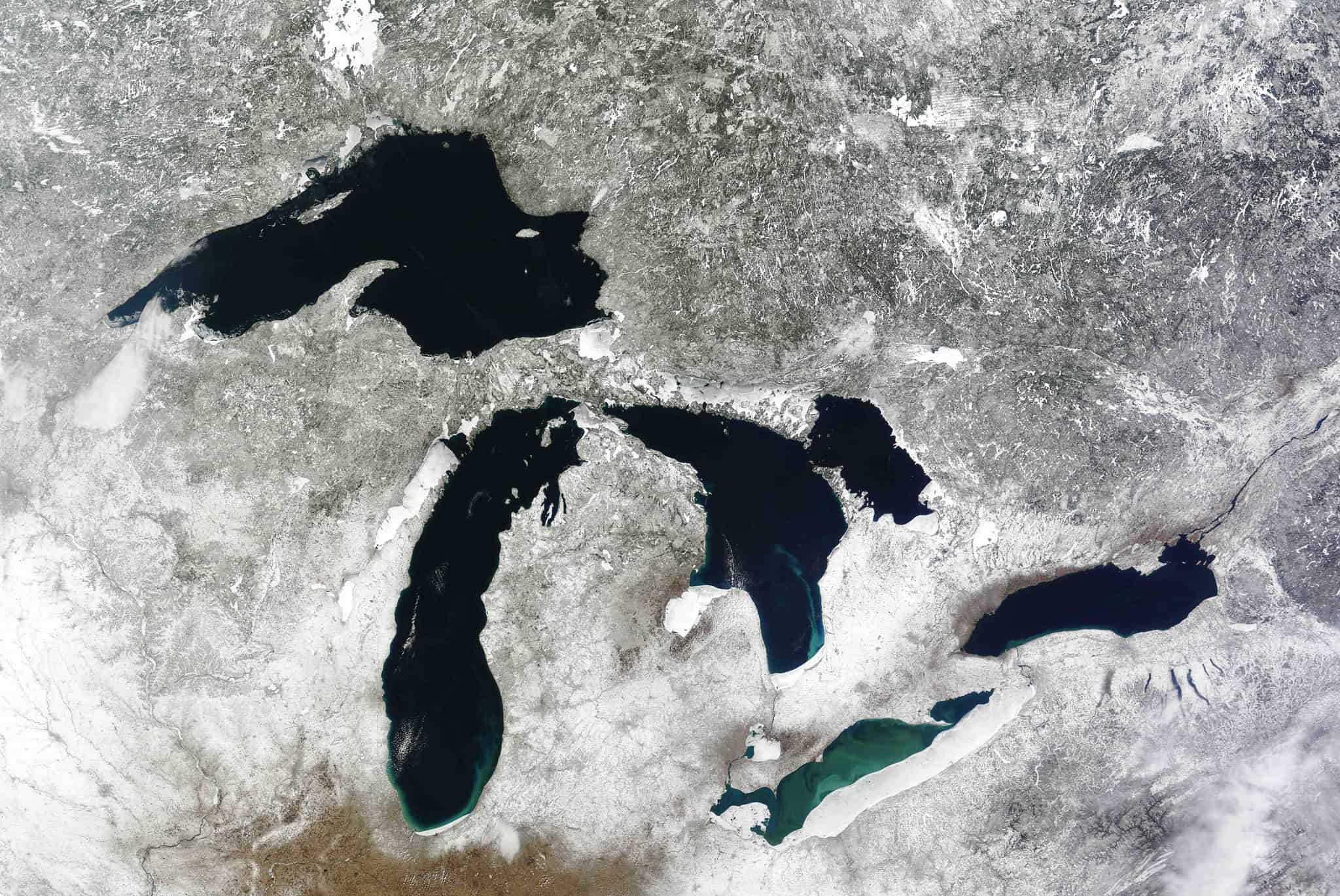
We have a salt problem in the Great Lakes, and especially in Ontario. We apply millions of tonnes of road salt to Ontario roads every winter, and this is just the amount we know about! Private businesses and homeowners also apply salt to their driveways and parking lots.
That salt doesn’t disappear — it dissolves, separating into its sodium and chloride ions and running off into our soils, streams and wetlands, and infiltrating our groundwater. Our freshwater is becoming saltier.
Why salt?
Using salt as a de-icing agent is not a new practice. In Canada, it was first used experimentally in the 1940s.
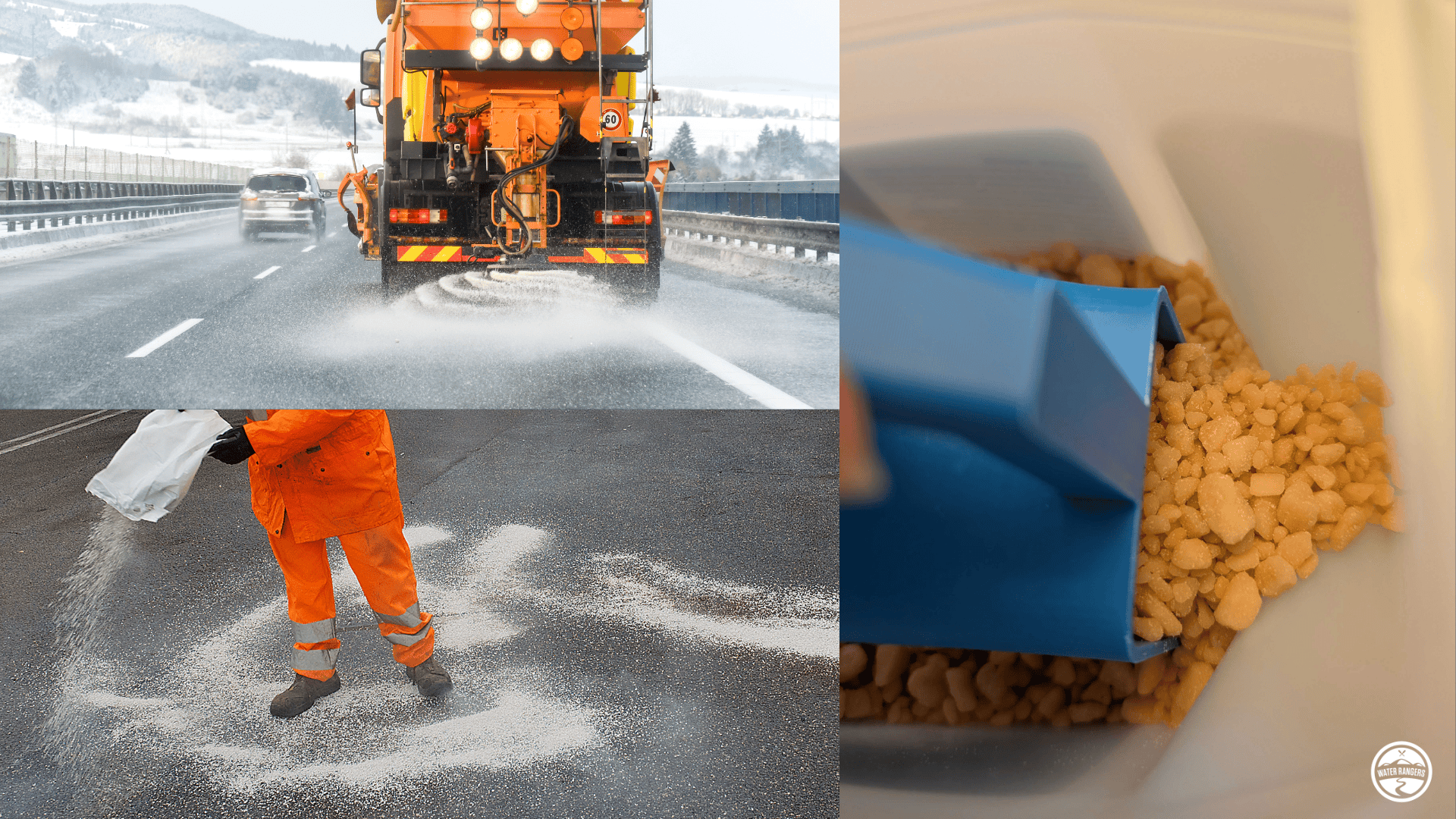
When spread on roads, sidewalks, and parking lots, salt proved to be highly effective at melting ice. It works by lowering the freezing point of water, which helps melt existing ice and prevents new ice from forming.
By the 1970s, salt had become the most common method for winter de-icing.
Today, terms like “winter road salts” and “sidewalk salt” refer to a range of chloride-based substances used during cold months to prevent ice formation on many surfaces—not just roads. The most common of these is sodium chloride.
Road salts are inexpensive, abundant, and highly effective, making them a staple of winter maintenance and a key tool for keeping roads and walkways clear and safe.
Watch our joint webinar with Water Watchers and Watersheds Canada discussing the impacts of salt pollution in Ontario and hear from experts about the solutions and actions you can take to keep our waters fresh!
Impacts of salt pollution
Federal chloride guidelines
There are chloride guidelines for the protection of aquatic life set by the Canadian Council of Ministers of the Environment (CCME)
- Acute (short-term): 640 mg/L
- Chronic (long-term): 120 mg/L
These values are meant to protect most aquatic life, but these guides may not protect some of Ontario’s most sensitive and endangered species, like endangered freshwater mussels
View the CCME guidlineRoad salts have become a necessity in icy Canadian winters to help keep roadways clear and safe. However, applying road salt introduces it into our ecosystems, where it pollutes our Great Lakes.
In 2001, Environment Canada published a report concluding that road salt containing chloride has proven adverse environmental impacts. As a result, road salts were listed as a toxic substance under the Canadian Environmental Protection Act. Read the report.
Later, the Code of Practice for the Environmental Management of Road Salts was published. Providing guidelines on best management practices and voluntary reporting of road salt usage. Despite these strides towards improvement, widespread use of road salt continues to make our lakes and rivers saltier!
Communities are taking notice as well. Many community scientists are finding that their local creeks and rivers—the places where they used to skip stones—are impacted by road salts. The idea that winter salt simply “disappears” after a storm melts away is misleading.
In urban watersheds, the situation is far worse. Water Rangers’ director, Gabrielle Parent-Doliner, often monitors the Humber River in Toronto and found concerning concentrations of salt. Results recorded by the community and the Toronto and Region Conservation Authority (TRCA) over the winter months were not just above Canada’s safety guidelines for aquatic life, but many times higher, approaching the salinity of seawater. View the TRCA’s Stream Water Quality dashboard.
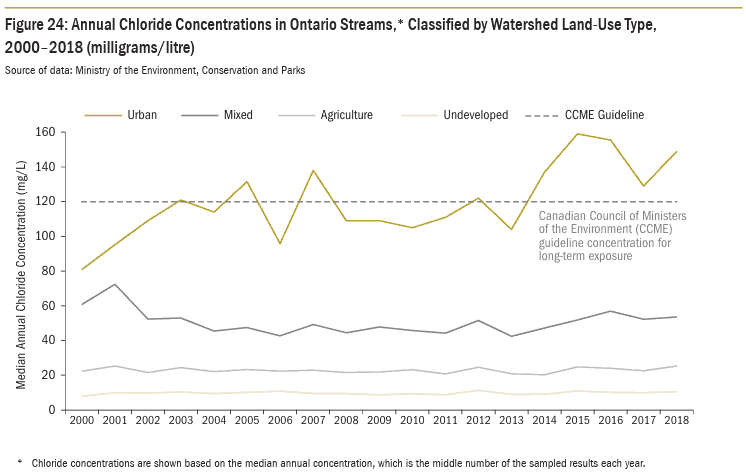
The evidence is in our hands and in test results: what we put on our roads doesn’t vanish—it flows directly into the waters that sustain us.
This salinization of our freshwater can cause many problems, including:
- contamination of drinking water
- increased mortality rates of aquatic wildlife and/or behavioural changes
- disrupting oxygen and nutrient cycling dynamics
- damages to infrastructure and vehicles by corrosion
- health risks to people on low-salt diets
- increased costs for water treatment and repairing infrastructure
Harm to aquatic life
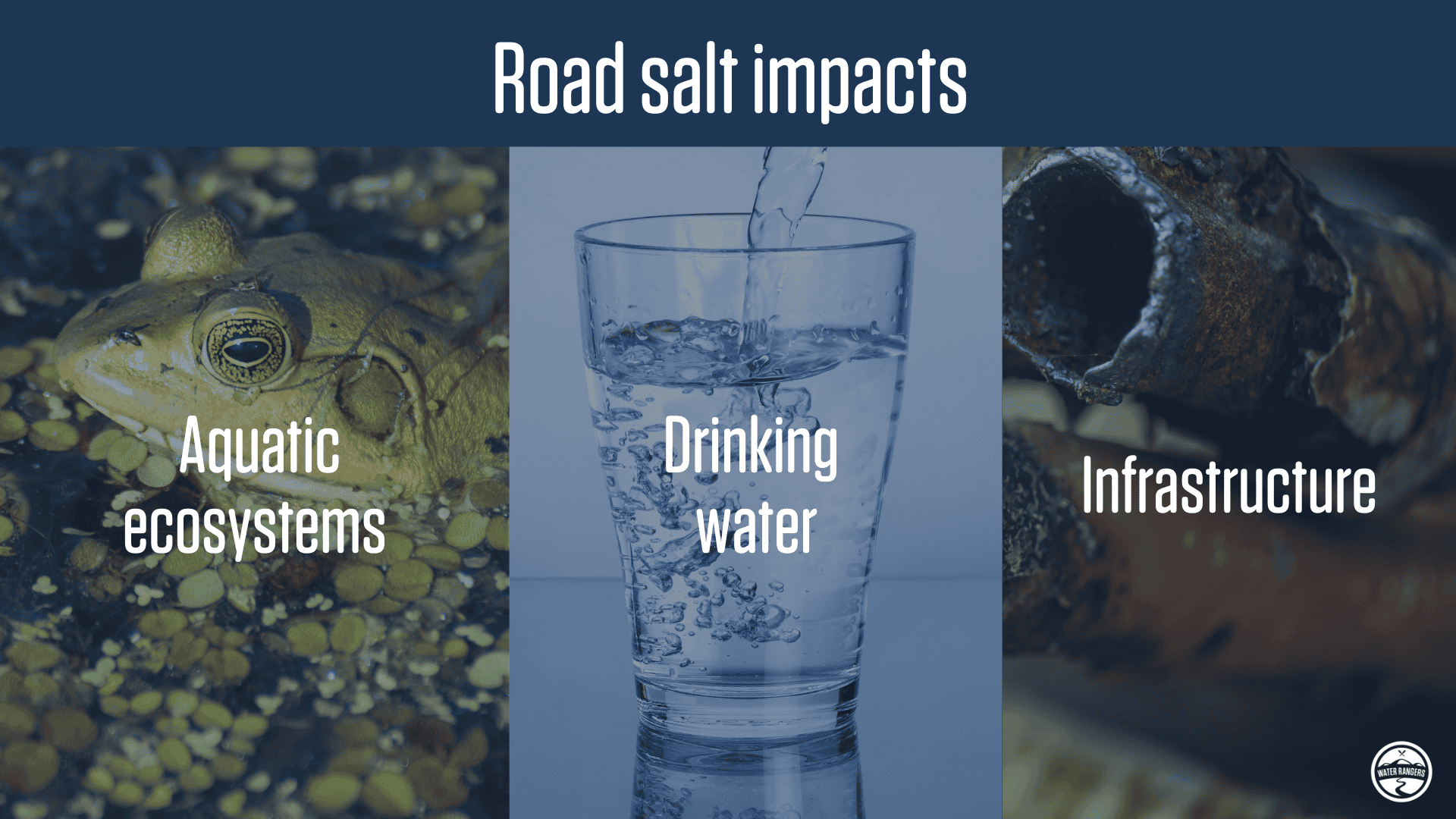
Saltwater is often toxic to freshwater aquatic life. This means as the Great Lake waters become saltier, the mortality rate of small aquatic species increases, impacting entire ecosystems by depleting prey for larger species. Saltier water also allows the introduction of invasive species which can outcompete native species for remaining food, exacerbating the impact on Canadian fish and wildlife.
Contamination of drinking water
Just like aquatic life, over 40 million people rely on the Great Lakes to provide fresh drinking water. Salt in drinking water can have negative effects on human health, so ensuring our drinking water stays fresh can help prevent costly investments in water treatment facilities to remove salt.
Damages to infrastructure
Salt is corrosive to metals, meaning road salt can damage infrastructure and make costly repairs more frequent. Cars, stormwater/drainage pipes, bridges and highways are all damaged by road salt corrosion.
Take action
It starts with you
This is a complex problem, balancing safety with the damage caused by polluting our freshwater with salt is no easy feat. But small actions can make a big difference. So, rather than stopping salt use completely, there are ways to use your road salt more efficiently, saving you money, keeping you safe, and better protecting the environment.
Keys to effective salt use
- Timing matters: Apply salt 2-3 hours before storms.
- Remove snow and ice before salting.
- A coffee mug of salt is enough for a single car driveway or 10m of sidewalk.
- Brine (super salty water) sticks better to the road and is more effective in colder temperatures.
Timing
Prevention is key when it comes to tackling winter storms. When you apply salt, the weather conditions can make a big difference in how well the salt will work. Applying salt 2-3 hours before you expect a storm to hit means the salt can start working to prevent ice from forming right away. It is also more likely to stay in the targeted area if applied just before a storm, which means you’ll use less overall. It’s also important to know that typical “dry” salt (or solid salt crystals) only work well when the temperature outside is warmer than -10॰C (14॰F).
Snow Removal
Always remove snow before salting your driveway or sidewalk! This allows direct contact with the pavement, which both melts formed ice and prevents more ice from forming. Removing snow can also prevent a layer of insulated ice from forming near the ground in the first place.
Reduce the amount of salt
The truth is, you don’t need to use that much salt for it to be effective! You’ve probably seen extra salt piling up in corners of parking lots, driveways and buildings over the winter months. This salt is often washed away and ends up directly in your local creeks, rivers and lakes.
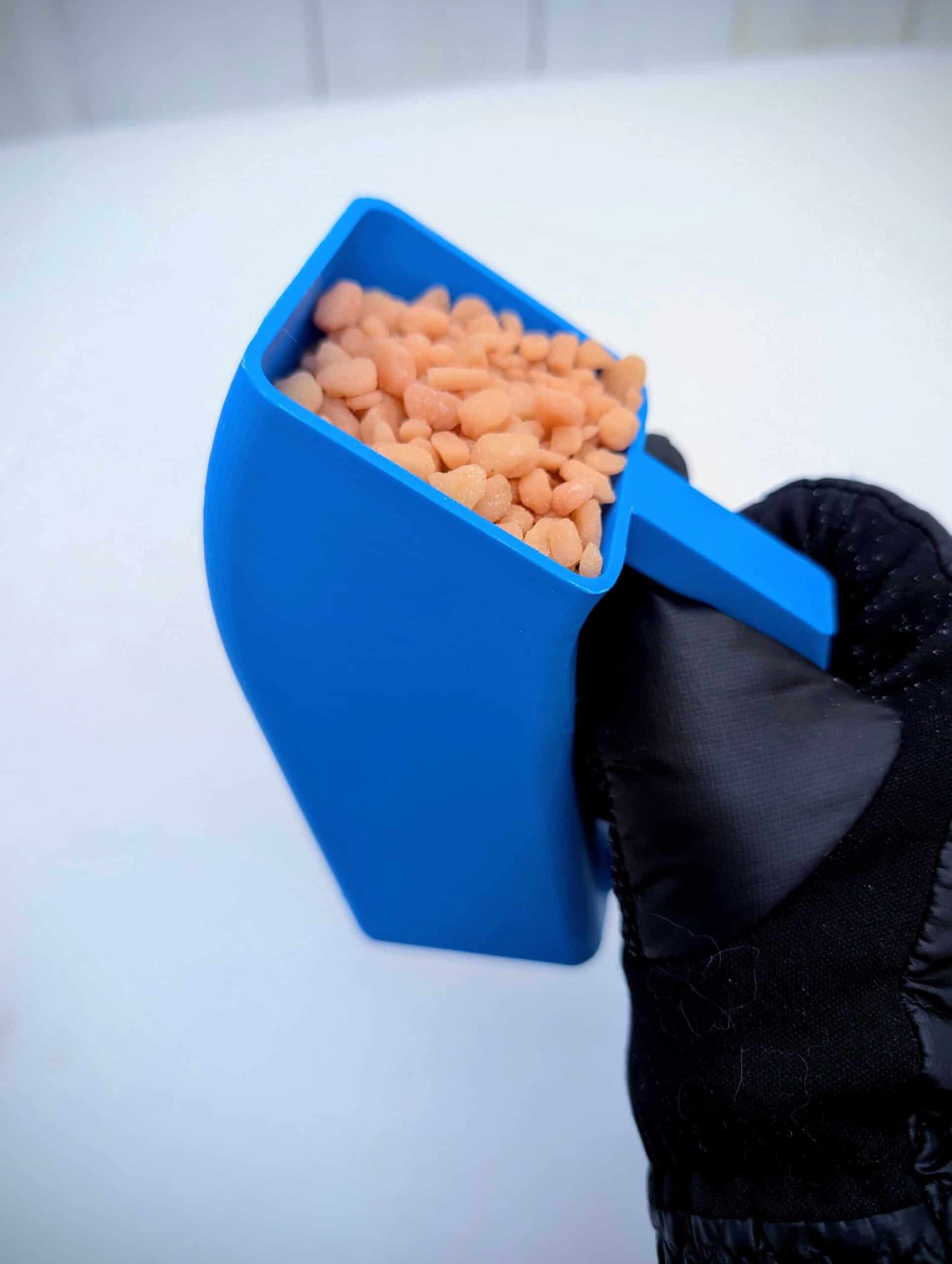
One filled coffee mug of salt (about 350 grams) is enough to cover a 500 square foot driveway or 10 sidewalk squares. Just make sure you distribute the salt evenly and not in clumps. Salt pieces can be 3 inches away from each other and still be effective.
We’ve been making salt scoops in-house with our 3D printer to make it easier to apply the right amount of salt. Get your own salty scoop here.

Brine
Brine recipe
- Add 2.5 lbs (1.13 kg) of salt to one gallon (3.8 L) of warm water
- Wear gloves and eye protection to avoid irritation
*Damaging to metals and plants.
Brine is extremely salty water (over six times more salty than the ocean), which is becoming a popular alternative to road salt crystals. Because of their solid form, salt crystals can easily bounce off the road or be swept away by melting snow and vehicles. Brine helps stick salt to the roads and works better at colder temperatures than dry salt. A lot of municipalities in Canada and America have started converting their winter salt trucks to brine trucks! You can also use brine to make your dry salt more effective! Pre-wetting or spraying brine before you scatter salt stops the salt from bouncing off your driveway or sidewalk and helps provide some of those colder-temperature benefits.
WHAT ELSE CAN YOU DO?
Monitor local salt impacts
While we know, based on available data, that chloride levels are concerning, it is difficult to fully understand the impact of road salt on the Great Lakes due to current gaps in chloride monitoring. Helping reduce these data gaps can provide a more accurate representation of the health of the Great Lakes.
DATA GAPS
- Spatial gaps: While the Great Lakes and major rivers are directly monitored, many small tributaries and waterways go unmonitored. This can lead to the underrepresentation of urban hotspots – meaning salt contributions from cities can go unaccounted for.
- Temporal gaps: Monitoring chloride levels throughout the winter can be difficult but is necessary in order to capture chloride levels at their highest! Developing practical, year-round, safe ways to monitor road salts can help fill some data gaps.
- Missing parameter integration: Road salt monitoring shouldn’t just be about how much chloride is in the water. Understanding how chloride levels interact with other water quality parameters (like conductivity, nutrients and microbes) can help us better assess the ecosystem’s health.
- Monitoring strategy gaps: As of now, most chloride monitoring is done by organizations capturing a water sample at one moment in time. Community-based winter monitoring has been less utilized to date.
Since 2024, Water Rangers has been piloting a new testkit to monitor winter road salt impacts. Some of the early results have been as startling as they are sobering. Volunteers from our Lake Erie Rangers program—along with partners from other organizations—have been regularly testing chloride at locations across the Lake Erie basin and nearby areas. View our interactive map of community chloride data.
Interested in getting involved? You can order your own winter chloride test kit or reach out to learn more about joining the Lake Erie Rangers program.
Winterize vehicles
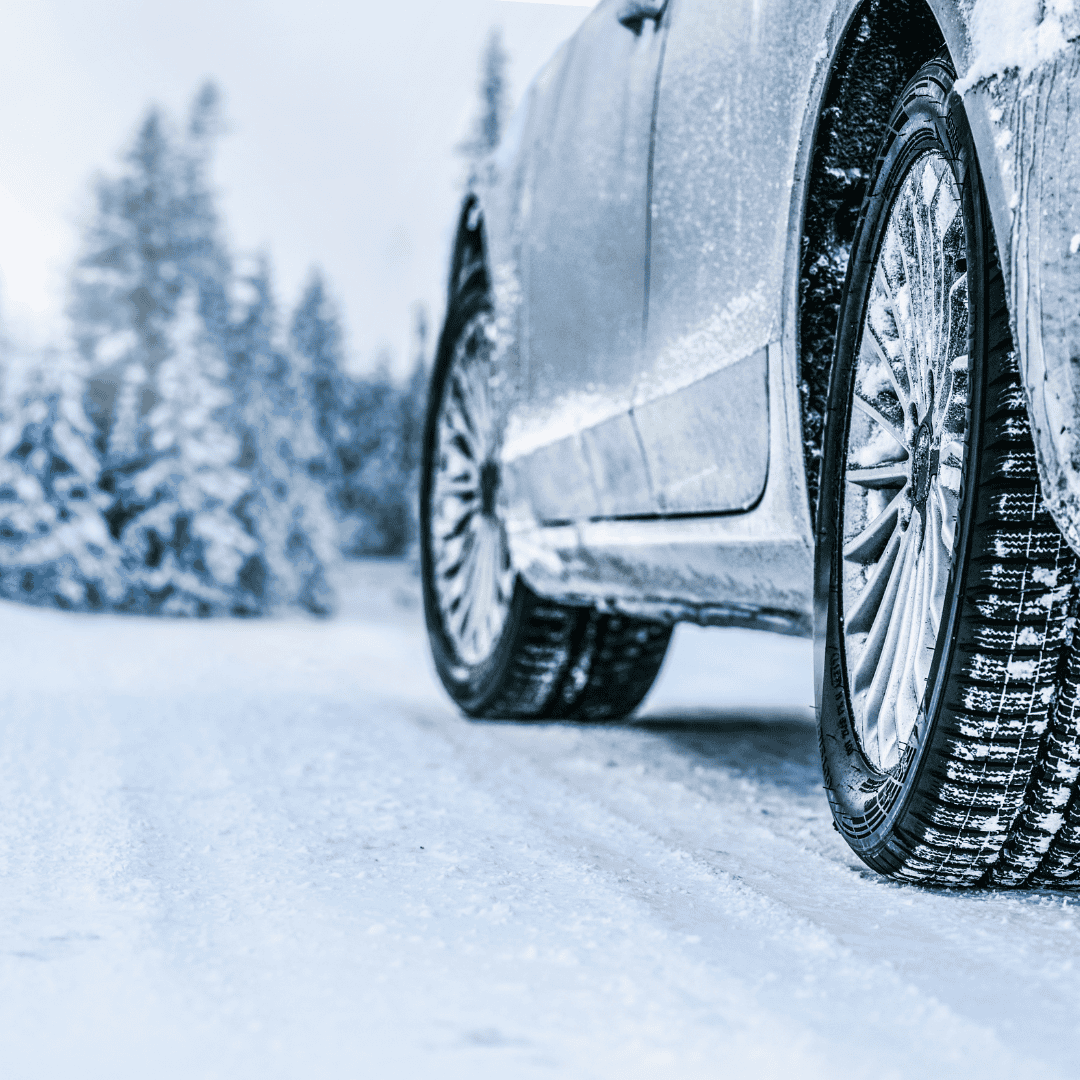
In 2023, 76% of Canadian drivers used winter tires. However, in Ontario, only 67% of drivers switch over to winter tires. Winter tires are designed with flexible rubber components and tread designs which both allow for shorter stopping distances and better traction on snow and ice. Making sure your vehicle is winter-ready helps protect both you and other drivers on the road!
Alternatives to salt
Besides your typical road salt and brine, there are other methods for de-icing roads or providing traction. Some of these are still being researched to determine other possible negative impacts.
Magnesium/Calcium chloride
The most common form of road salt is sodium chloride (just like your table salt). However, alternatives such as magnesium chloride and calcium chloride are also available. Both options are deemed more environmentally friendly than sodium chloride, although they are more expensive options. Magnesium chloride is less harmful to plants and animals, but it will actively absorb moisture from the air. Therefore, checking the weather before using this option is important. Calcium chloride is also safe for the environment according to the U.S. EPA, and it is also less corrosive to roads. It is also very effective at extreme temperatures as calcium chloride is effective as low as -30°C.
It is important to note that all of these chloride salts still contribute to rising chloride levels in the Great Lakes.
Sand
Small amounts of sand can be used in extremely cold temperatures to help create traction. Sand will remain effective even in extremely cold temperatures when salt becomes ineffective; however, sand does not melt ice like salt. Sand can also have environmental impacts. Like salt, sand can end up in aquatic ecosystems and stormwater facilities, creating sediment and turbidity. There is a debate over whether sand is better, the same, or worse for the environment than road salt. Overall, sand is a viable option in the northern parts of Canada, where total snow or ice removal isn’t possible in the winter and drivers still need traction to use the roads safely.
Beet juice
Another contentious alternative to road salt is beet juice. In the last 10 years, beet juice has been researched as a solution to use with or instead of road salt in a similar way to brine. It functions really well at cold temperatures and doesn’t make waterways saltier (although it must be used with salt brine to melt ice). For example, the Missouri Department of Transportation uses 80% salt brine and 20% beet juice on their roadways. However, the natural sugars in beet juice can exacerbate algae blooms, and the potassium can negatively impact local insects. Researchers are still looking into the overall effects of beet juice as an alternative and whether it is more beneficial than harmful to the environment.

Calls to action – summary
- Reduce salt use around your home : use less, and adopt better practices.
- Push for municipal change : ask your city/town to adopt smarter salt practices.
- Monitor with Water Rangers’ Winter Testkit to fill the data gaps.
- Support salt coalition efforts, research and advocacy: fund, volunteer, share.
- Learn more & spread the word: stay informed, tell others.
Learning centre
Keep it Fresh is a Lake Erie Rangers‘ campaign that educates the public about the environmental impacts of salt, explains current chloride guidelines, and introduces concrete actions people can take to help protect freshwater.
Organizations and coalitions
- Smart About Salt Council – training and certification for safer winter salt use
- Ontario Salt Pollution Coalition – province-wide advocacy to reduce salt pollution
- Watersheds Canada Salt Pollution Toolkit – resources and research into salt impacts
- Friends of the Muskoka Watershed / Muskoka Watershed Council – research and local action on salt impacts
Key reports and studies
- Priority Substances List Assessment Report for Road Salts (Canada, 2001) – federal assessment declaring road salts “toxic” under CEPA
- Code of Practice for the Environmental Management of Road Salts – Five Year Review – review of Canada’s salt management practices
- The State of the Environment in Ontario, Office of the Auditor General of Ontario, 2023
- Road Salt Impacts Freshwater Zooplankton (Arnott et al., 2020) – harm to aquatic life at levels lower than many guidelines
- Chloride Trends in Ontario Surface & Groundwater (Sorichetti et al., 2022) – shows rising chloride levels across Ontario
- Assessing and Predicting Lake Chloride Concentrations (2023) – modelling chloride in Canadian urban lakes
- Relative Toxicity of Road Salt Alternatives (Gillis et al., 2021) – comparison of salt alternatives and their impacts
- Road Salt Monitoring – Ottawa Riverkeeper – citizen science data on chloride in the Ottawa River watershed
- Road Salt Policy Review (Watersheds Canada, 2024) – gaps and opportunities in Canadian salt policy
Take action to monitor and reduce road salt:
-
Winter Testkit
USD$165.00 -

Chloride test strips – 10 pack
USD$38.00 -

Salt/Sand Scoop
USD$7.50
Contributing to the community!
Water Rangers is community-led. So, if you have any questions, ideas, or notice any errors, please tell us!