Community Lab results
Help us test regularly!
We need help to monitor these locations (and others) every week! Learn more about sponsoring a spot or how to volunteer with the lab!
Interested in using our lab for a blitz event or setting up your own lab? We’ve developed protocols and tools that we can share. Contact us to learn more (or plan to visit us).
The results of our Community Water Lab for the River Wey region and surrounding area will be posted here! For more information about the lab and how you can get involved or get a test done, visit our Community Water Lab page.
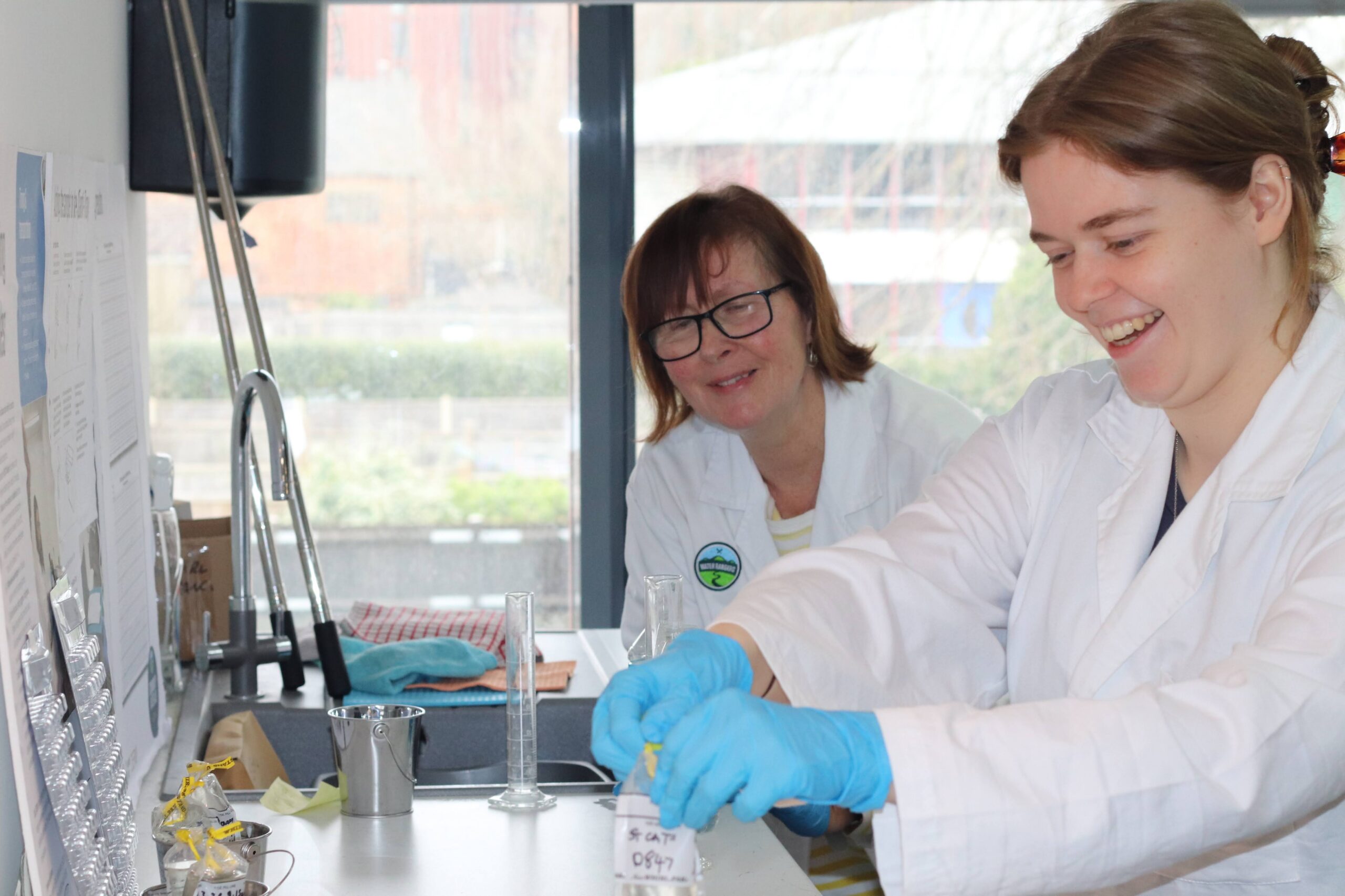
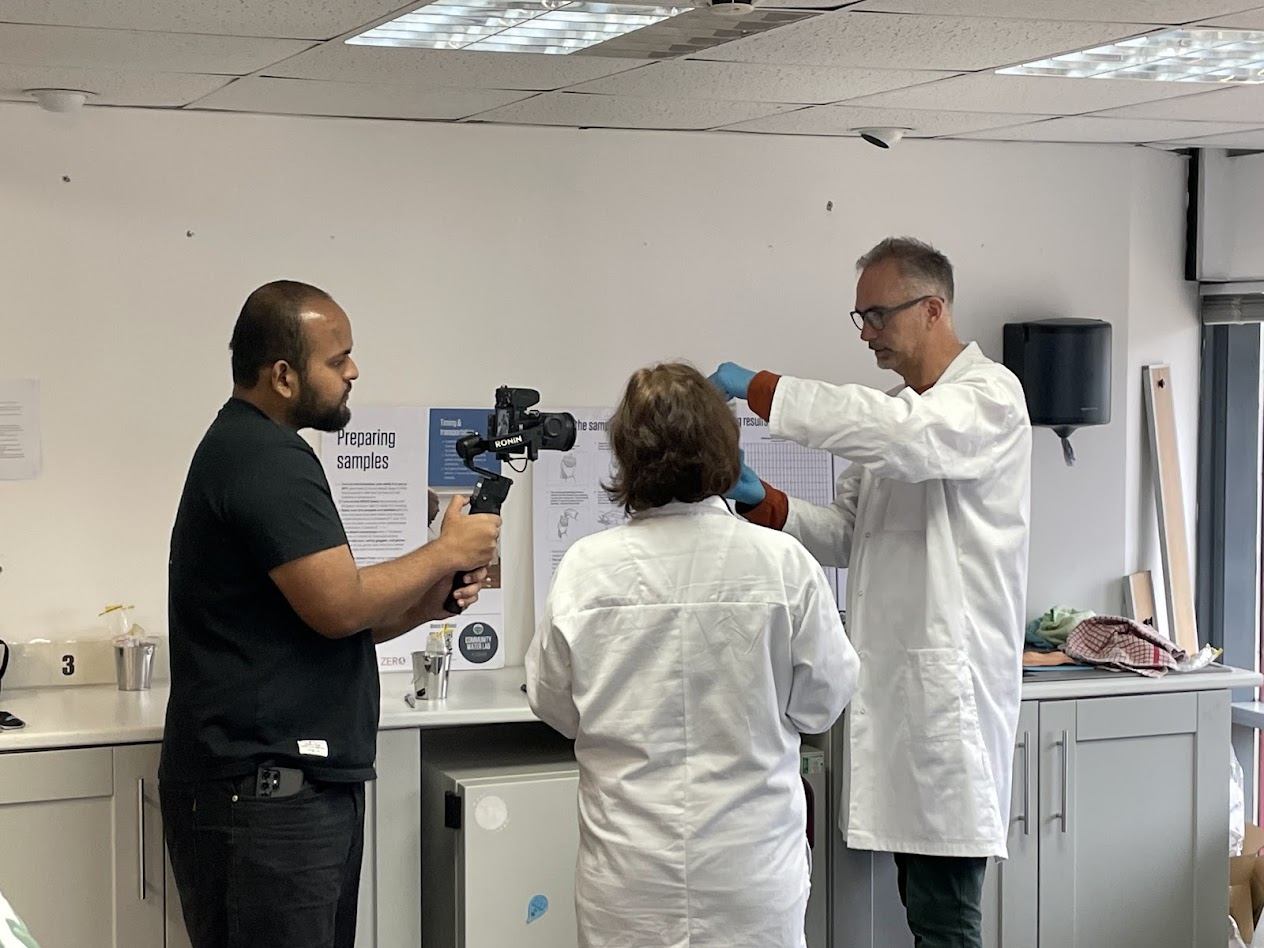
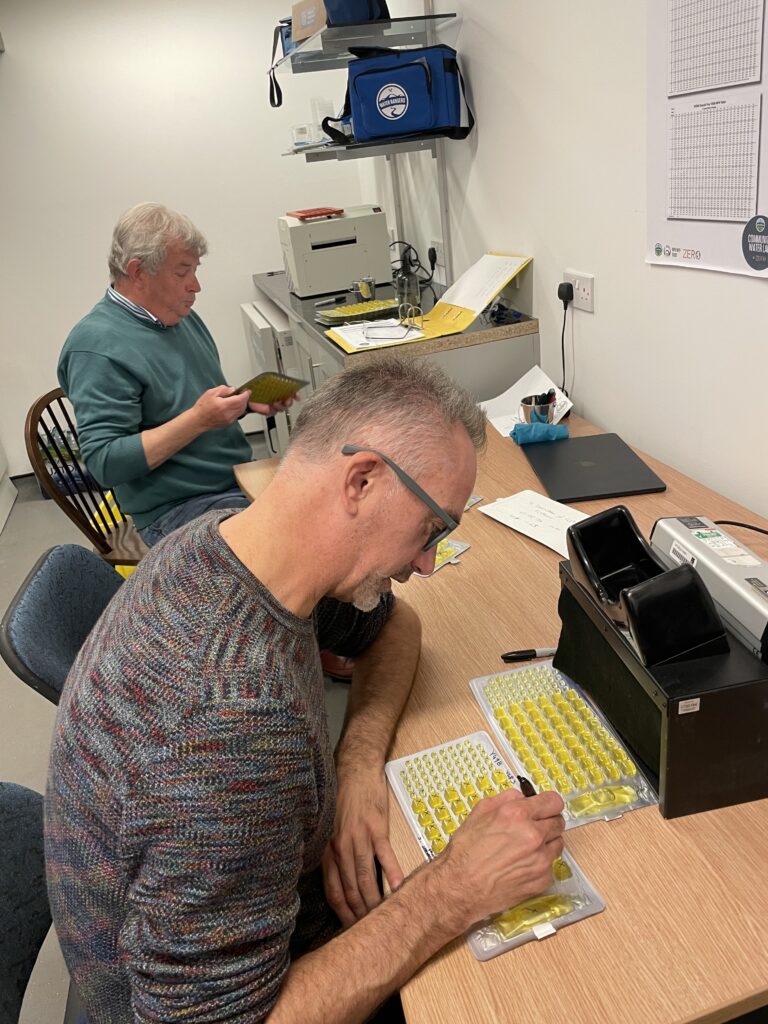
Each test is collected by, and processed by, volunteers at ZERO Guildford on Friday mornings (learn more about volunteering in the River Wey region). We especially need couriers to help bring samples to the lab each Friday morning). We can only process samples that have been sponsored (by community sponsors or through a grant) or purchased (£15/sample, much more affordable than traditional labs).
Latest week’s results
Our sample locations map
Context
- The UK Environment Agency classifies inland bathing waters as Excellent, Good, Sufficient, or Poor, based on two to four years of testing rather than a single sample. So one reading can’t tell you how a bathing water is officially classified, but it can show you how today’s water compares to their thresholds. We’ve used 1,000 CFU/100 mL as the cut-off, which is the upper limit of the Good classification (if over 95% samples are under 1,000 CFU/100mL) and the most common interpretation for single samples. More on interpreting the results is here.
- We use a certified method, IDEXX colilert. This test also gives us a reading for total coliform, but there are no set recommended levels and so most people should be looking at E. coli. You’ll see total coliform recorded on the Water Rangers Data Platform.
- Our regular tests allow us to test to up to 2,420 CFU/100mL. If we suspect that a sample will be higher than that, we perform a careful dilution of mineral or distilled water to allow us to read results up to 4,840 CFU/100mL (50% dilution) and 24,200 CFU/100mL (90% dilution, 10% sample).
- Where “R-Card” is shown, this is using ROTH R-Cards as an alternative to the IDEXX method. Results from these cards which can be processed at home with a small ‘egg incubator’ and give us a way to help folks continue monitoring when they can’t deliver their sample to the lab each week. While considered a ‘coarse’ measure, it’s still showing us if results are low, medium and high in a meaningful way.
- Water Rangers is providing this information as a service to the community. Our code of conduct does not allow us to take any political stance. Learn more about our code of conduct to understand why.